  |
|
The Nixie Tube Propeller ClockNTPC has spun
times since midnight!
|
|
|||||||||
| Nixie & Clock History | |||||||||
|
Nixie Tubes
The Nixie tube is one of the most ancient electronic display technologies, predating the LED, the LCD and other contemporary displays. It was invented by the 2nd generation Hungarian-American Haydu brothers in 1952, and was marketed by the Burroughs Corporation from 1954. Technically speaking, the Nixie tube is a cold-cathode gas discharge tube, very similar to ordinary neon bulbs. The difference is that Nixie tubes have not one, but multiple cathodes, crafted in the shape of the supported symbol set. Connecting a sufficiently high voltage (typically 170 V) between one of the cathodes and the anode, the desired symbol will light up in a beautiful, ethereal orange glow. The name "nixie" comes from the abbreviation "NIXI", referring to "Numeric Indicator eXperimental No. 1". While the word has become a genericized trademark, thus often spelled with all lowercase letters, I personally prefer the capitalized version, to give the device its due respect. The Wikipedia article on Nixie tubes offers a good starting point for further research. Today the technology is clearly obsolete, but the classy vintage appearance of the tubes themselves and the light they emit keep artisan hobbyists enthusiastic. A growing problem has been the vanishing inventory of Nixies, mostly supplied by unearthed NOS repositories in Russia. However, adventurous entrepreneurs such as Dalibor Farny have set out to meet the challenge and rekindle the craft of Nixie-making. So no worries; the neon will keep glowing on! Propeller Clocks
The first know propeller clock was built by Bob Blick in 1995, using a vertical column of small green LED's as the display element. Since then, the technology has found its way into commercial devices, such as the Fantazein Message Clock, which shakes a column of LED's on a windshield-wiper-like contraption, or the different (sometimes quite large) "globe" signs, spinning the LED's mounted on a semi-circle, which then traces out a sphere. The second propeller clock using a Nixie tube was built by Jon Stanley in 2006; his excellent Electronix and More website hosts a plethora of information about vintage equipment and cool projects. NEONIXIE-L Yahoo! Group
The NEONIXIE-L Yahoo! Group was founded on January 27, 2002, by crackpot inventor Raymond Weisling (the designer of the Four Letter Word and GeekKlok electronic surrealities, the former displaying random four-letter words - yes, "four-letter words"! - at regular intervals). As we later learned, Ray had had the idea of creating a community for hobbyists interested in this unique technology, so he started to prowl eBay monitoring recent Nixie tube transactions for a short period of time, and politely approached the buyers and sellers with his Yahoo! Group idea. I happened to be one of the buyers caught up in Ray's web (no pun intended). I gladly accepted Ray's invitation, but was a bit skeptical, thinking that he wouldn't be able to recruit more than a handful of people. But I was wrong - the group really took off within weeks, and played a significant role in igniting the Nixie renaissance that has grown enormously since then. Note that the original NEONIXIE-L Yahoo! Group no longer exists; it has been replaced by the neonixie-l Google Group. This Nixie Tube Propeller Clock
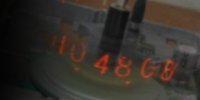
The Nixie Tube Propeller Clock has been a labor of love for me, improving and chiseling it over the decades. The first prototype of the clock (shown in the picture) was built in the summer of 2002, and spun out the first complete time/date display on June 27, 2002 at 0:30:52 CDT (in Chicagoland). In this version, the headphone jack used as the inner part of the "slip ring" dropped down from above the Spinning Board, and the contacts were mounted on the board. The mechanical design went through a major overhaul in 2006 by flipping the headphone jack and the contacts, and the firmware was also updated. The year 2014 saw a significant expansion of the firmware, with the addition of most of the current display patterns and the entire sound engine. Finally, propeller clock nirvana was achieved in 2023, with the implementation of the fully contact-free solution that replaced the slip rings with inductive power transfer and infrared signal coupling; since then, the clock has required zero maintenance. More details on the clock's evolution can be found on the NTPC Mechanical Design page.
|
||||||||


|

